Music, tradition, and change
by Christopher Witulski
This module examines how musicians preserve and innovate cultural traditions by exploring the Mande jeliya of West Africa, highlighting the dynamic relationship between music, memory, social roles, and historical change.
Assignment / Module
Continuing with the thread of “telling stories,” we turn to look at a more literal case of music serving as a conduit for memory and history. One context that serves as a useful example for how musicians maintain the stories of a community is that of the jeliya of the Mande from West Africa. Historically, the jeliya have been a social class of musicians connected through family lineages who hold a significant responsibility to maintain stories while turning them into everything from honor to power to global fame.
The Mande ethnic and language group spans the region including and around current day Mali to Senegal. It includes a broad array of more specific categories, some of which, like the Mandinka or Mandingue are mentioned in the videos below. These groups look back to a long history of pre-colonial wealth and power. The founder of the Malian empire (one of a handful of Mande empires) was named Sundiata, a figure who appears often in the region’s songs. Stories of magic and music fuse power and the arts within the communities memory and helped to enable the importance of the jeliya over time.
An aside before moving directly to the jeliya themselves: Mansa Musa was an early ruler of the Malian empire in the 1300s. His wealth made him arguably the richest man in the world at the time. It’s said that when he traveled to far off Cairo, he brought enough gold to cause an economic collapse because of devaluation. In North American educational systems, we often learn about European history at the expense of the histories of other places. A quick internet search on Mansa Musa will show just how important these other centers of power were around the globe.
Mande social structure
Mande cultures historically included a caste system: social structure is layered and hierarchical. It’s a more loosely-formed structure than what we might see in places like India (and, arguably, in the United States), in that interactions between castes were not prohibited except for intermarriage. The main two categories were enslaved peoples or serfs (jon) and the freeborn (horo), with the enslaved at the bottom of the hierarchy. (Slavery is no longer a part of these communities.) Freeborn groups were divided into two main categories for our purposes here: the sula, which included nobility, merchants, soldiers, and others, and the nyamalo, craft specialists. Social structure, therefore, looked a little bit like this:
- Sula (merchants, royalty, farmers, soldiers, and so on)
- Nyamalo (craftsmen)
- Jon (slaves/serfs)
Each of these had further subdivisions, and musicians of different types sat at the bottom of the nyamalo. They were blow blacksmiths and leather workers, but they were also divided: the jeliya were seen as masters of the verbal and instrumental arts. They were above similar verbal artists who come from other areas, for example.
This all comes into play when we understand what the jeliya, these masters of instrumental song and poetry, do.
Jeliya roles
Most practitioners of a craft were connected with a patron, someone who they would honor with their music in exchange for financial support (food, clothing, a living). One of the main roles of the jeliya is praise singing. They would use a mastery of poetry and music making alongside their depth of understanding of family lineages and histories to sing and improvise music about their patron. They served as a mouthpiece for public support and played this role in many different ways.
Alongside praise singing, the jeliya could be a diplomat. An expertise with verbal skills and deep knowledge of their community’s history could serve a patron well, especially for nobility during negotiations. And their memorization of family genealogies and the lore of the past made the jeli an historian and storyteller.
Because of their proximity to wealth and power and their relatively low caste status, the jeliya sat in a somewhat privileged social position: unlike their fellow artisans, some were able to maintain direct connections to wealth and power. And since these roles were hereditary, the knowledge, technical mastery, and verbal expertise was passed down within families. Many of the biggest contemporary musical stars from the region are members of jeliya families, with family names like Diabaté, Cissokho, and Kouyaté.
One of those masters was Toumani Diabaté, who passed away in 2024. Diabaté played the kora, a harp-like instrument. In this collaboration with Ali Farka Touré, the two artists discuss the jeliya and the role of music in Mali. They also talk about collaborating and combining very different styles from across the country. (Touré is not from the jeliya tradition.) At times, they use the word “griot,” which comes from French and means the same thing in this context. The 2005 album that they describe is called In the Heart of the Moon and is worth a listen.
Ali Farka Touré & Toumani Diabaté—In The Heart Of The Moon
While that video is a documentary with some interviews, here is a full live performance of one of the songs on the album, "Debe." And here is a link to the entire studio album on Spotify.
Changing contexts
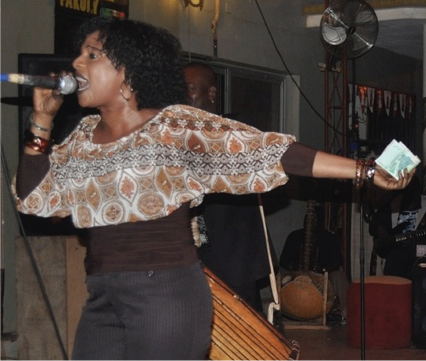
Figure 1: Singer performing in Bamako, Mali, photo by Chris Witulski
After colonialism, when French powers and shifting alliances broke down much of the economic structure in this region, the patronage system became less viable for maintaining a livlihood as a musician. But remnants of this past remain. Musicians can still hold close ties to political leaders, for example. Most, though, consider themselves to be “singers” or “musicians” more broadly and find ways to make an income through the music industry.
With the international success of musicians like Ali Farka Touré and Toumani Diabaté, Mali and Mande music became some of the growing “world music” industry’s biggest stories. Locally, however, the old systems hold sway. In Figure 1, a singer at a famous bar in Mali’s capital, Bamako, is holding money that an audience member handed her in the middle of an event. I had the opportunity to visit Bamako for a short period and saw how a man stood and walked up to her mid-song. She reacted with improvised words about him before others came up and did the same. It turned into a moment of praise singing. I’ve seen the same happen when West African artists from this tradition perform in the United States.
Banning Eyre, a guitarist and producer for the radio show Afropop Worldwide, wrote in his book In Griot Time about an experience where younger jeli singers and instrumentalists would record cassette tapes of praise songs for local politicians. They mailed them to the public figures and, on occasion, received small amounts of money, by mail, in return.
Jeliya instruments
The instrument from this tradition that is likely the most recognizable now is the kora, made famous by Diabaté. The first 18 minutes from a documentary on the instrument discusses it’s place in jeliya music in more detail here. It also shows the construction and context: you can see real people playing.
Watch the opening 18 minutes of Voice of the Kora. The remainder of the film is one of the reading choices below.
The kora has been central to many contemporary projects from artists who draw from broad global styles and actively engage global audiences. Sona Jobarteh’s music serves as one example. Further, these instruments have historically been primarily associated with men. Jobarteh is a London-born member of a prominent kora-playing family lineage.
Sona Jobarteh—"GAMBIA" (Official Video)
Another important jeliya instrument is called the ngoni or koni. This used to be the primary jeliya instrument, before the international fame of the kora made that instrument more recognizable. It is constructed with 4 to 7 strings (usually 4) stretched across a carved wooden body and a long neck that is made from a wooden rod. Leather (animal skin) covers the wooden body much like on a banjo. This type of instrument appears across West Africa in many shapes and sizes and with many names.
The most prominent contemporary player is Bassekou Koyate who, like Diabaté, has formed a band that combines Mande styles with global pop music.
Bassekou Kouyate & Ngoni ba—“Jama ko” (2013)
There are other instruments, including the balafon, a xylophone-like instrument that shows up in some of these videos. But it’s really a vocal style, even if many of the global stars are instrumentalists (and men). Rokia Traoré is someone who actively combines different West African sounds to create something that sounds both traditional and modern.
Rokia Traoré—Projet Roots au 104
Reading options
These instruments carry significance for their communities. The musicians that play them carry long histories within their songs, but the instruments themselves act as symbols of identity and memory. This was a brief overview of a specific context and the reading for this section allows you to dig deeper into this idea, whether in West Africa or the Americas.
For the readings in this section, choose two of the following resources.
Option 1: “Africa and the Blues” from Afropop Worldwide
In this podcast, memory plays a distinct role as elements of musical style travel the world and appear in different places. In this case, we hear about how specific bits of musical identity come out of the realities of people’s lived experiences. Were they able to gather? What were the living conditions? How do legal or structural limitations on socialization impact music (as was the case under slavery in America)? Not only does musical sound give us some clues about life, these sounds hold meaning and memory, as demonstrated by the constant urge to locate “Africa” in the blues and “the blues” in Africa.
Afropop Worldwide: “Africa and the Blues”
Option 2: Under African Skies
The documentary Under African Skies came out in 1989, a time when the music of Mali was reading international stages. It includes interviews and performances with some of the most celebrated musicians from Mali and explores the history of how that country has found so much artistic and commercial success.
Option 3: Sekuru’s Stories
This website, put together by Jennifer Kyker, an ethnomusicologist at the University of Rochester, highlights memories and stories of music, songs, instruments, and family as they exist in Zimbabwe. It’s a different part of Africa, but some of the themes are familiar to the discussions here, as they are globally.
Option 4: The Voice of the Kora
The first few options expand on the material from above and look at how music and musicians adapt in new contexts. The rest of the film that you started earlier follows the kora to explore innovations that different musicians and instrument builders make. As you see and hear these newer ideas, think about whether these are adaptions, examples of wonderful creativity, or something more akin to inappropriate appropriations. How does the instrument and music change in each case and is this good? Bad? Respectful or disrespectful? Or is it just irrelevant?
Assignment: Tradition and Innovation
We’ve been looking at music and memory in different ways with a focus on a small handful of musical histories. In this discussion post, you will listen and research how some of these things operate elsewhere. Your response will have two main goals:
- Listen to, research, and describe a tradition based on what you learn from a recording, liner notes, and any other resources that are relevant and useful
- Listen to, research, and describe how contemporary artists work within the tradition to uphold it and/or innovate within it
As you write, draw on the material from early in the class as you describe what you hear and be sure to make specific connections to the more recent readings and films to consider how memory, history, and innovation are working. What is similar to what we have covered? What is different? What feels familiar to other things that you listen to or experience in your life? What’s different or makes you think about the music you love in a new way?
I am open to some broader ideas about what you want to write about, but I will strongly suggest that you draw from the catalog at Smithsonian Folkways. They have a vast collection of music that is for sale and, importantly, their recordings often include well researched liner notes. These are almost always available as PDF files on the website. Even better, many (if not almost all) of the albums in their collection are available through online streaming services.
Step 1: listen and research through Folkways
Go to http://www.folkways.si.edu and browse around for a bit. You can find recordings by genre or geography using the drop down menus on the left, or search for something that interests you. For most albums, you can both stream the music and read their detailed and well-researched liner notes without logging into anything. Smithsonian Folkways has a major focus on American folk music traditions, but I challenge you to try some recordings that feel unfamiliar to you. Look it up on Apple, Spotify, or elsewhere to listen to the complete work, if necessary.
After you do some exploring in the collection, you will choose one individual album for your discussion. I’d recommend you go with something that has good notes and that you can listen to in its entirety.
Step 2: find more recent artists and examples
This part is trickier and will involve some internet searching. Look for reviews, recommendations, and so on to find artists who are doing interesting things within the same genre or style. You’ll listen to and read about a track or album from this artist so that you are able to reference specific choices in performance and presentation.
For example: if you are interested in old time American music, you may be inspired to find some old time fiddle or banjo music. There’s an album on Folkways called Black Banjo Songsters of North Carolina with music from artists like Dink Roberts. This interest in Black artists drawing from Black string band traditions may bring you to Layla McCalla. or Jake Blount. Notice that I’m linking to articles here, the kinds of things that you may find on the internet.
Note: the point here is to listen to a lot of music. Don’t be afraid to ask for advice. Also, it’s not always easy to tell if something is old or new. For the first half, you’re looking for artists who are influential in some way and in the second, the artists who might be influenced, but those lines are really blurry. It’s OK to simply say so!
Step 3: write
In a short (300 word) essay, you will do the following:
- Describe the geographic area and musical culture of the example, giving any reason that brought you to that choice. Give the name of the songs and performers that you’re discussing so that others can find the music. Links are also really helpful.
- Discuss the music. What is interesting about the melody? Is there harmony, and how does it work? What about the form, the timbre, the textures? How would you describe the rhythm? This can be somewhat short, but you can discuss the different artists in contrast with each other to make some of your other ideas more clear.
- Give some context for the example. If you can’t find this in the liner notes at the Smithsonian website, search around the internet or through other online resources to help. Cite your sources using a standard bibliographic format. I use Chicago Author-Date, but you can use whatever your field of study prefers. Just make sure it’s real and consistent. (Most have a format for liner notes, but you can use the website format if necessary.)
- From your listening and research, describe what about the music and the artists feel innovative or traditional. What are they trying to do and how are they drawing on or pulling away from past ideas, ideals, styles, and so on? Are there innovative collaborations? Why are these artists doing this? Sometimes there are social and political statements that go along with artistic ones. Sometimes they might be marketing. Sometimes it’s both or something else entirely.
For your comments to your peers’ essays, go and listen to the examples and respond your group members’ analyses. Give any suggestions or additions and comment on the music itself. Think about whether these changes or consistencies align with other things that you hear. Use the terminology from the course.
(Influence, homage, innovation, and tradition are all central to most—if not all—music. Almost everything sounds like something else in some way. It’s another discussion, but we could do this about popular music. Bruno Mars has made music that sounds like almost everything from the 1950s to 1990s, for example! While the assignment focuses on the Smithsonian Folkways catalog, your comments can come from anywhere.)
Review the discussion grading rubrics for details.
Related materials
Christopher Witulski
Associate Teaching Professor | Bowling Green State UniversityChristopher Witulski is the author of The Gnawa Lions (2018) and Focus: Music and Religion of Morocco (2019), two books focusing on changes in sacred performance practices in contemporary Morocco. He is also an active performer of Arabic and American old time music on violin, ‘ud, and banjo.